Weather Data Patterns Enhancing Entry Strategies in Outdoor Event Accumulators
Bianca Carter · Oct 23, 2026
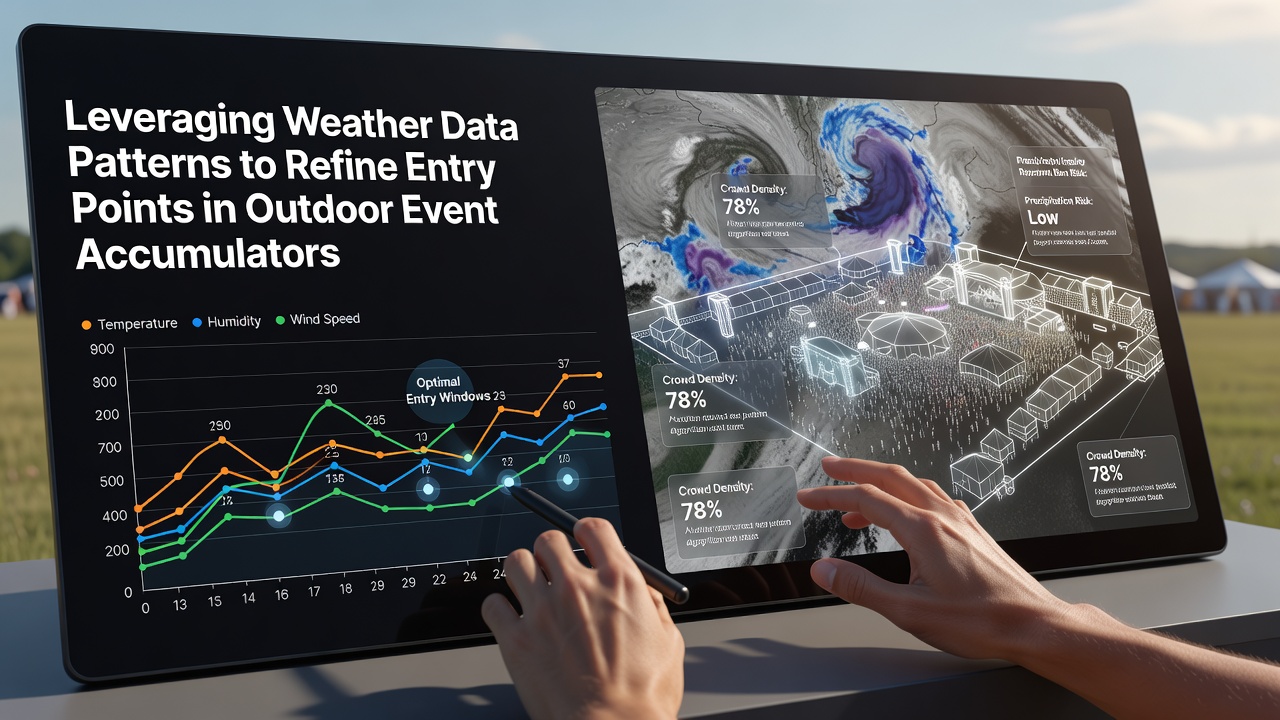
Weather Data Patterns Enhancing Entry Strategies in Outdoor Event Accumulators
Outdoor event accumulators combine multiple selections across sports such as tennis, golf, horse racing, and soccer where atmospheric conditions directly influence outcomes, and analysts integrate weather data patterns to adjust entry points before markets settle. Historical records from events held between 2024 and 2026 show that wind speed, precipitation probability, and temperature swings alter player performance metrics and animal behavior in measurable ways, prompting operators to recalibrate odds while bettors refine timing of their accumulator builds.
Researchers at institutions tracking global sports environments have documented how sustained winds above 25 kilometers per hour reduce serve percentages in professional tennis by an average of 8 percent, a shift that compounds when multiple matches appear in a single accumulator slip. Those patterns become actionable when forecasters release updated models 48 hours ahead of scheduled starts, allowing entry decisions to shift toward selections where athletes demonstrate proven resilience under similar conditions.
Core Weather Variables That Alter Event Dynamics
Temperature gradients affect muscle response times and equipment performance, while humidity levels influence ball flight and grip stability across different surfaces. Precipitation probability forecasts issued by agencies such as the National Oceanic and Atmospheric Administration help operators and analysts quantify surface changes on grass and clay courts, whereas temperature inversions at racetracks alter stride efficiency in thoroughbred fields. Observers note that wind direction relative to the course layout creates directional biases in golf tournaments, particularly on coastal venues where crosswinds exceed 30 kilometers per hour for extended periods.
Studies conducted by the Australian Bureau of Meteorology in partnership with sports performance labs indicate that dew point thresholds above 18 degrees Celsius correlate with elevated error rates among players unaccustomed to heavy air, data that feeds directly into accumulator construction when multiple matches occur on the same day. Those thresholds appear consistently in match logs from tournaments held during transitional seasons, giving analysts a repeatable signal for adjusting stake timing.
Integrating Forecast Models Into Accumulator Timing
Modern accumulator strategies rely on layered forecast updates rather than single-point predictions, because ensemble models issued by meteorological services provide probability distributions that better capture variance across an event window. Bettors who monitor successive model runs can identify when initial projections drift, prompting earlier or later entries depending on whether conditions are trending toward or away from historical performance benchmarks. This approach proves especially relevant during shoulder months when weather systems move rapidly across continents.
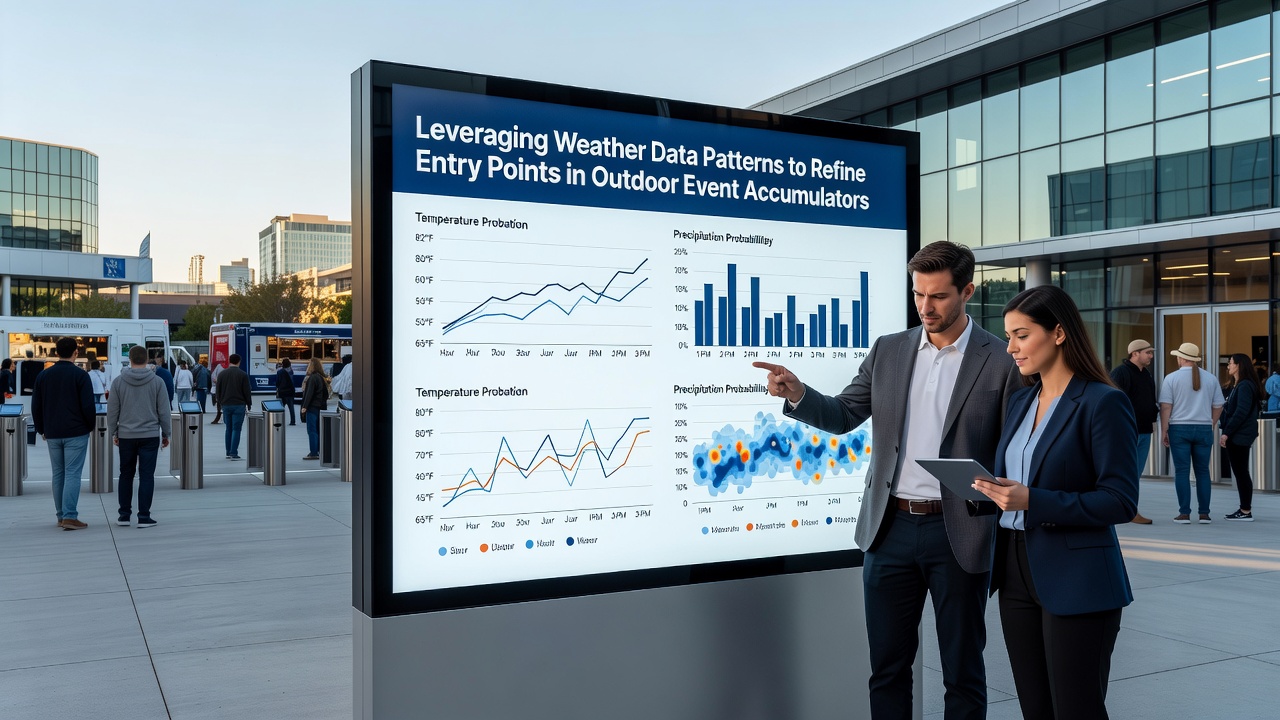
One documented workflow involves cross-referencing ensemble outputs from Environment and Climate Change Canada with venue-specific microclimate data, then layering those inputs against historical player statistics collected under comparable conditions. The resulting matrix reveals windows where certain selections gain or lose expected value, guiding the precise moment an accumulator ticket is finalized. Industry reports from 2026 highlight increased adoption of such layered processes among professional syndicates operating across European and North American circuits.
Practical Application Across Multiple Sports
In horse racing, track bias shifts caused by rainfall timing determine whether speed or stamina profiles dominate, and forecasters who release updated precipitation timing within six hours of post time enable more accurate selection of distance-suited runners. Golf tournaments respond similarly to wind vector changes, with analysts tracking hourly gust forecasts to identify players whose recent rounds align with projected conditions. Soccer matches played in open stadiums experience reduced passing accuracy when crosswinds exceed 20 kilometers per hour, a factor that surfaces in both pre-match and in-play accumulator adjustments.
Those who've examined multi-week datasets from major outdoor circuits observe that combining three or more weather-sensitive selections into one accumulator increases sensitivity to forecast revisions, which in turn affects optimal entry timing. October 2026 schedules, for example, featured several high-profile events where rapid weather shifts prompted syndicates to delay final accumulator submissions until updated model runs narrowed probability ranges.
Data Sources and Analytical Tools
Publicly available datasets from government meteorological agencies supply the foundational inputs, while commercial weather services add higher-resolution downscaling for specific venues. Academic papers published in journals focused on environmental statistics demonstrate that machine-learning overlays applied to historical weather and performance records can isolate interaction effects that simple averages overlook. Analysts incorporate these refined outputs into decision frameworks that flag when an accumulator's expected value crosses predefined thresholds based on current forecast confidence intervals.
Links to primary data providers such as the National Oceanic and Atmospheric Administration and the Australian Bureau of Meteorology allow continuous model verification, ensuring that entry refinements remain grounded in the most recent observational updates rather than static assumptions.
Conclusion
Weather data patterns supply measurable signals that refine entry points for outdoor event accumulators by aligning forecast variables with documented performance responses across tennis, golf, racing, and soccer. Continued integration of ensemble models and venue-specific microclimate records supports more precise timing decisions, while cross-referencing against historical datasets maintains consistency in how those signals translate into accumulator construction. As forecast resolution improves and real-time data streams expand, the connection between atmospheric conditions and accumulator strategy continues to develop along established analytical pathways.